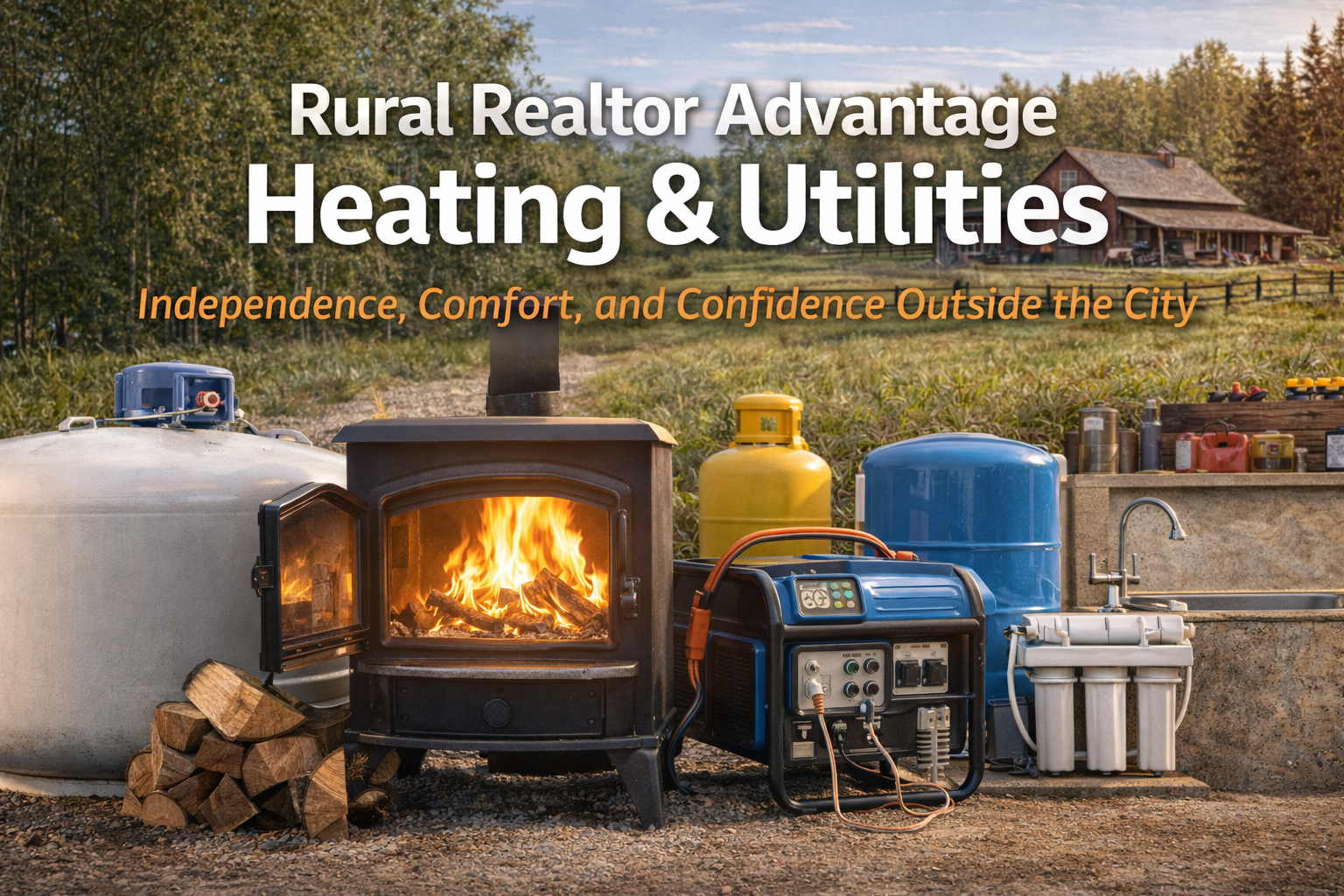
Independence, Comfort, and Confidence Outside the City
By Rory Hale – REALTOR®, CIR Realty, Rural Properties & Acreages near Calgary
You wake up before sunrise.
The foothills are still. The coffee is hot. The air is crisp. No traffic hum. No neighbours starting engines. Just space.
And inside? It’s warm.
That warmth didn’t come from a distant plant miles away. It came from your system. Your fuel. Your setup. Your plan.
If you’re moving from Calgary into Mountain View County or the MD of Bighorn, heating and utilities are the one part of rural life that feels mysterious at first — and then becomes one of the most satisfying parts of owning an acreage.
Let’s walk through it properly.
Natural Gas
In some pockets of Mountain View County and parts closer to Cochrane or larger corridors, rural natural gas is available. When it is, it feels familiar to city buyers. High-efficiency furnaces, sealed combustion, quiet operation — very similar to suburban homes.
But here’s the difference: out here, you’re more aware of the infrastructure. The service line might run across open land. You might share a utility corridor with neighbours. You may have to confirm service capacity if you’re planning a large shop or secondary dwelling.
Natural gas in rural Alberta is comfortable and convenient. It’s just not assumed. When a property has it, it’s a quiet advantage.

Propane (The Rural Standard)
Propane is probably the most common heating fuel you’ll see in the foothills.
A large tank sits outside the house — sometimes above ground, sometimes buried. A delivery truck fills it periodically. Your furnace runs just like a city gas furnace, except the fuel source is on your land.
The first time city buyers see a propane tank, there’s usually a pause.
Then they realize something: it’s simple.
You monitor levels. You schedule fills. You can lock in rates if you like predictability. Larger tanks reduce fill frequency. Well-insulated homes stretch your fuel dramatically.
In practical terms, propane heating is reliable, powerful, and very well suited to Alberta winters. The key variable isn’t the fuel — it’s the home’s insulation and air sealing. A tight building envelope makes propane extremely efficient.
And there’s something satisfying about knowing your winter heat is literally stored on your property.

Wood Heat (The Independence Layer)
Let’s talk about the one that changes everything.
Wood heat isn’t just about BTUs. It’s about autonomy.
A properly installed wood stove or wood-burning insert gives you something city systems don’t: complete independence during outages.
If the power goes out, your stove doesn’t care.
You’ll often see rural homes running a primary propane or gas furnace with a wood stove supplementing during colder months. That setup provides both convenience and resilience.
It also changes how the house feels. There’s a different quality of warmth from radiant wood heat. It’s steady. It’s deep. It’s atmospheric.
For buyers who want a smooth transition, the key is making sure the installation is safe, properly vented, and well maintained. For buyers who love independence, it’s one of the most empowering features of rural living.

Electric Heating (Simple and Clean)
Electric heating is more common in smaller homes, modular builds, cabins, and increasingly in newer, efficient homes paired with heat pumps.
It’s mechanically simple. No combustion. No flue. No fuel deliveries.
You’ll see electric furnaces, baseboards, or ductless heat pumps.
For city buyers, this can feel reassuring because there’s less visible infrastructure. But electricity costs can be higher depending on usage and rate structures, so the house’s insulation quality becomes even more important.
Modern heat pumps deserve special mention. In shoulder seasons — fall and spring — they’re incredibly efficient. In colder stretches, they may rely on backup heat strips. In well-built homes, they can be a very comfortable option.
Electric systems are clean and quiet. They’re just part of the bigger utility conversation.
Water Utilities: Well vs Cistern (Comfort Either Way)
Wells
If the property is on a drilled well, you’ll have a submersible pump and pressure tank inside the home.
The system delivers water with consistent pressure, and once properly sized and set up, it feels exactly like city water.
Seasonal changes — like spring runoff or dry years — may influence certain wells, but most drilled wells in this region are stable and dependable.
Add proper pressure tank sizing and maybe a backup power plan, and you’ve built resilience into your water system.
Cisterns
Cistern systems are different, but not difficult.
Water is delivered to a storage tank. A booster pump pressurizes the home. You monitor usage and schedule fills.
Some city buyers initially hesitate — and then realize something important:
You’re in control of your consumption.
Many families actually prefer cisterns because usage becomes intentional and predictable. There’s no surprise well variability. Just clean, stored water delivered on schedule.

Seasonal Thinking (Foothills Rhythm)
Rural utilities move with the seasons.
In winter, insulation and backup heat matter.
In spring, you might check well clarity or power reliability after storms.
In summer, electrical demand increases if you’re running shop tools or irrigation.
In fall, you service furnaces, inspect chimneys, and test generators.
It’s not complicated. It’s cyclical.
And once you’ve lived through one full rural year, it feels natural.
What I Do for You (So Rural Feels Simple)
When a city buyer walks into a mechanical room full of tanks and pipes, it can feel overwhelming.
That’s where local experience makes all the difference.
I help you:
Understand what you’re looking at — in plain English.
Estimate operating costs realistically.
Confirm service sizes for future shop plans.
Identify practical backup options.
Interpret well vs cistern setups calmly and clearly.
Time inspections so you don’t feel rushed.
Turn mechanical complexity into confidence.
It’s not about protecting you from disaster.
It’s about helping you feel capable.
Documentation (Optional, But Handy)
Some owners keep detailed records. Others run everything by experience.
Both approaches work.
But during a transaction, a few helpful items smooth things out:
Furnace service history.
Electrical panel rating.
Propane tank ownership or lease terms.
Generator specs (if installed).
Well production details (if available).
It’s not about red tape.
It’s about clarity.
If You Remember Only 3 Things
Rural heating systems are reliable — they’re just independent.
Backup planning is simple and affordable.
Once you understand your utilities, rural comfort feels empowering — not risky.
Moving from Calgary to Mountain View or Bighorn isn’t about giving something up.
It’s about stepping into ownership — of your land, your systems, and your comfort

