
By Rory Hale – REALTOR®, CIR Realty, Rural Properties & Acreages near Calgary
One of the biggest shifts for anyone moving from the streets of Calgary to the rolling hills of the Alberta foothills is becoming your own utility manager. In the city, you turn on the tap and the water just is. Out here, you are the steward of your own water system.
Living northwest of Calgary, we are blessed with incredible scenery, but the geology beneath our feet can be a bit of a "mad scientist." From high mineral counts to the specific way our wells are built, there is a lot of science happening in your pipes.
The Dynamic Duo: Iron & Manganese
If you’ve noticed your white towels turning a subtle shade of "foothills orange" or your morning coffee having a metallic "bite," you’ve likely met iron and manganese. In Alberta, these aren’t just dirt; they are naturally occurring minerals from the rock formations we tap into for water.
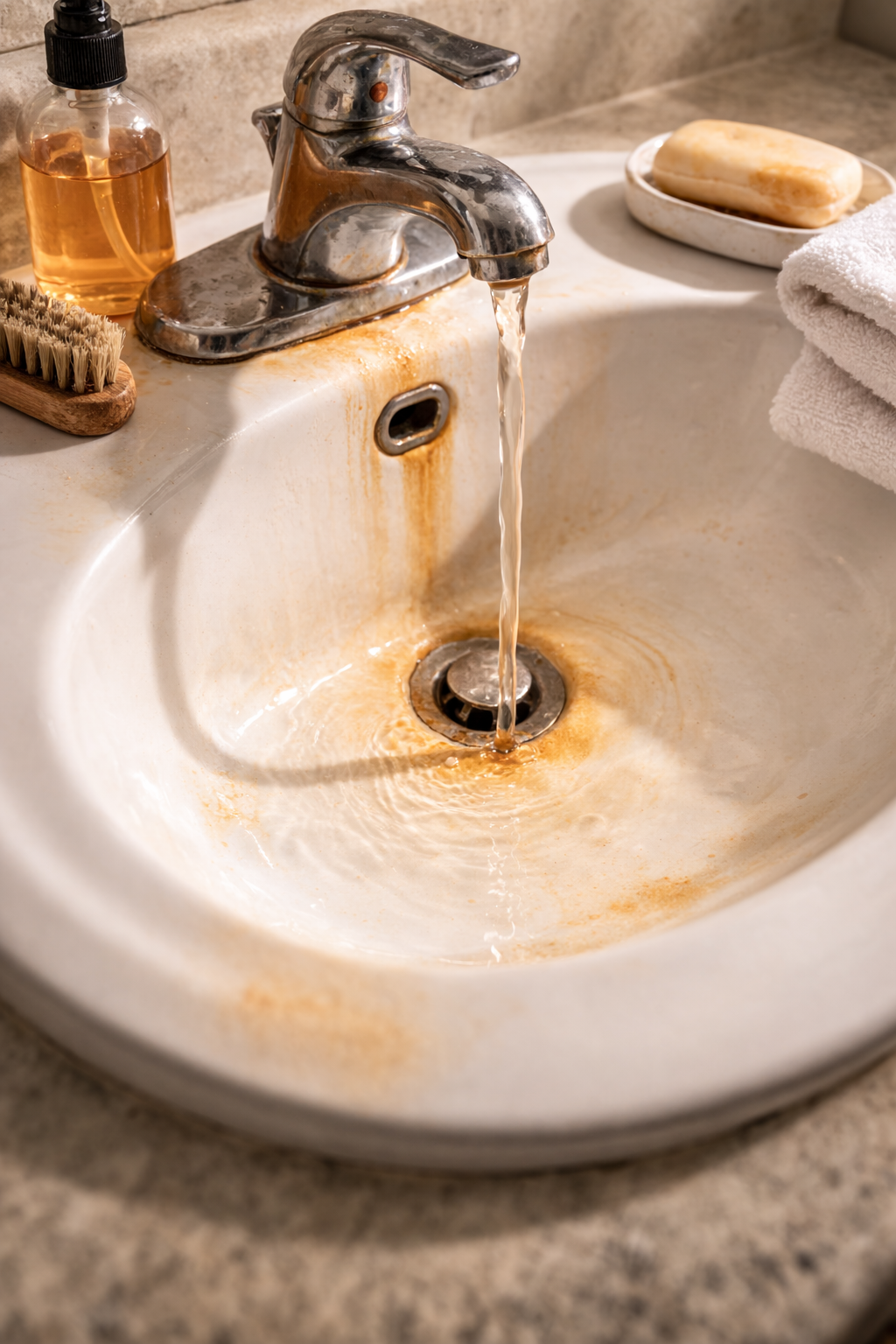
1. Iron (The Stainer)
Iron comes in two main forms in our area:
Clear Water Iron (Ferrous): This is the "ninja" of iron. The water looks crystal clear when it comes out of the tap, but once it sits and hits the air (oxygen), it turns into a solid, leaving those infamous rust-colored stains in your sinks and toilets.
Red Water Iron (Ferric): This iron has already oxidized. Your water looks like weak tea or orange juice right from the start.
2. Manganese (The "Dirty" Cousin)
While people often talk about "iron and magnesium," the real culprit in the foothills is often Manganese. It acts a lot like iron but leaves behind jet-black, oily-looking stains. If you see black flecks in your dishwasher or dark rings in the tub, that’s manganese.
Pro Tip: While these minerals aren't usually a health risk at typical levels, they are a "lifestyle risk"—they'll chew through your appliances and stain your laundry if not managed.
Taming the Minerals: Types of Filters
You don't have to live with orange water. Depending on your water test results, we usually look at three main solutions:
Air Induction Oxidation (AIO) Filters: These are the most common "green" solution. They use a pocket of air inside the tank to turn the dissolved iron/manganese into a solid, which is then trapped in a filter bed and flushed away. No chemicals, no salt, just air.
Manganese Greensand Filters: These are the heavy hitters. They use a special purple-coated sand and a chemical (potassium permanganate) to oxidize and grab the minerals. Great for high concentrations.
Water Softeners: For very low levels of "clear water" iron, a high-quality softener can sometimes do the trick, but it's usually better to have a dedicated iron filter so you don't "foul" the expensive resin in your softener.
The "Straws" in the Ground: Types of Wells
How your water gets to the surface depends on where exactly your property sits. In the foothills, we generally see three types of wells:
1. Drilled Wells (The Gold Standard)
Most modern properties northwest of Calgary have drilled wells. These go deep—often 100 to 400 feet or more—to tap into the bedrock aquifers. They are narrow (usually 6 inches) and cased in steel or PVC to prevent surface water from leaking in. They are reliable and provide the cleanest, most consistent water. Access to the wells can be very different in a single area, for Example my well in 110 feet, yet me nieghbours well just across the road is only 55 feet. I have very hard water, and just up the road a couple of KMs, my nieghbour has soft water.
2. Bored Wells (The Wide Mouths)
Common on older homesteads or in areas where the deep water is too salty, bored wells are much wider (2-3 feet) but shallower (usually under 100 feet). They act like a big "holding tank" in the ground. Because they are shallow, they can be more sensitive to drought or surface runoff. I recently saw a well in the Bragg Creek area that was only 9 feet deep. Being fed from the ground water from the river. It flowed clear and clean filtered by the soil and gravel just under the surface.
Flow Rate & Recovery
Think of your well like a bank account. The Flow Rate is how much you can withdraw at once (measured in Gallons Per Minute or GPM). The Recovery is how fast the "bank" refills from the aquifer.
The Sweet Spot: Ideally, we want to see 5 GPM.
The Solution: If a well only does 1–2 GPM, don't walk away! We simply install a Cistern (a 1,000+ gallon indoor storage tank). The well trickles into the tank all night, and you have plenty of water for morning showers and laundry.

The Takeaway
When you’re looking at a rural property, the well isn't just a pipe in the ground—it's the heart of the home.
Whenever my clients are looking at a new acreage, the first thing I recommend is a comprehensive water test. We want to know exactly what’s in that water—not just the minerals, but the bacteria and flow rate too. Knowing if you need a $2,000 filter or a $25,000 new well is a conversation you want to have before you move in!
Curious about the water quality in a specific area northwest of Calgary? let’s look up the historical well records for properties in the area. But remmeber your well can be very different.
The "No-Regrets" Solution Strategy
Water problems are only "deal breakers" if you find out about them after you move in. Here is how we keep you out of trouble:
The "Double Test": Don't just do the free AHS bacteria test (which is great for health). Order a full chemistry profile. We want to know the hardness, the sodium, and the mineral levels so we can price out the right treatment system before you buy.
The Flow Test: We hire a licensed well technician to run the pump for 1 to 2 hours (or longer for some counties). If the water level drops and doesn't bounce back, we know we have a recovery issue to address. There are solutions.
The Filtration "Shield": Modern technology is incredible. From Air Induction Filters that "breathe" away iron to Reverse Osmosis for the kitchen sink, we can make foothills water taste better than anything you’ll find in a city bottle.
Living in the foothills northwest of Calgary, we often say that while the forest feeds your soul. But a good well makes your land livable. In the city, water is a utility bill you pay; in the Alberta foothills, it’s a system you manage.
Plenty of dreams can be turned upside down when a buyer doesn’t look past the granite countertops to the pressure tank in the basement. As a rural realtor, my job is to make sure your dream doesn't come with a dry tap.
#WaterWell #RuralLiving #AlbertaAcreage

