By Rory Hale – REALTOR®, CIR Realty, Rural Properties & Acreages near Calgary
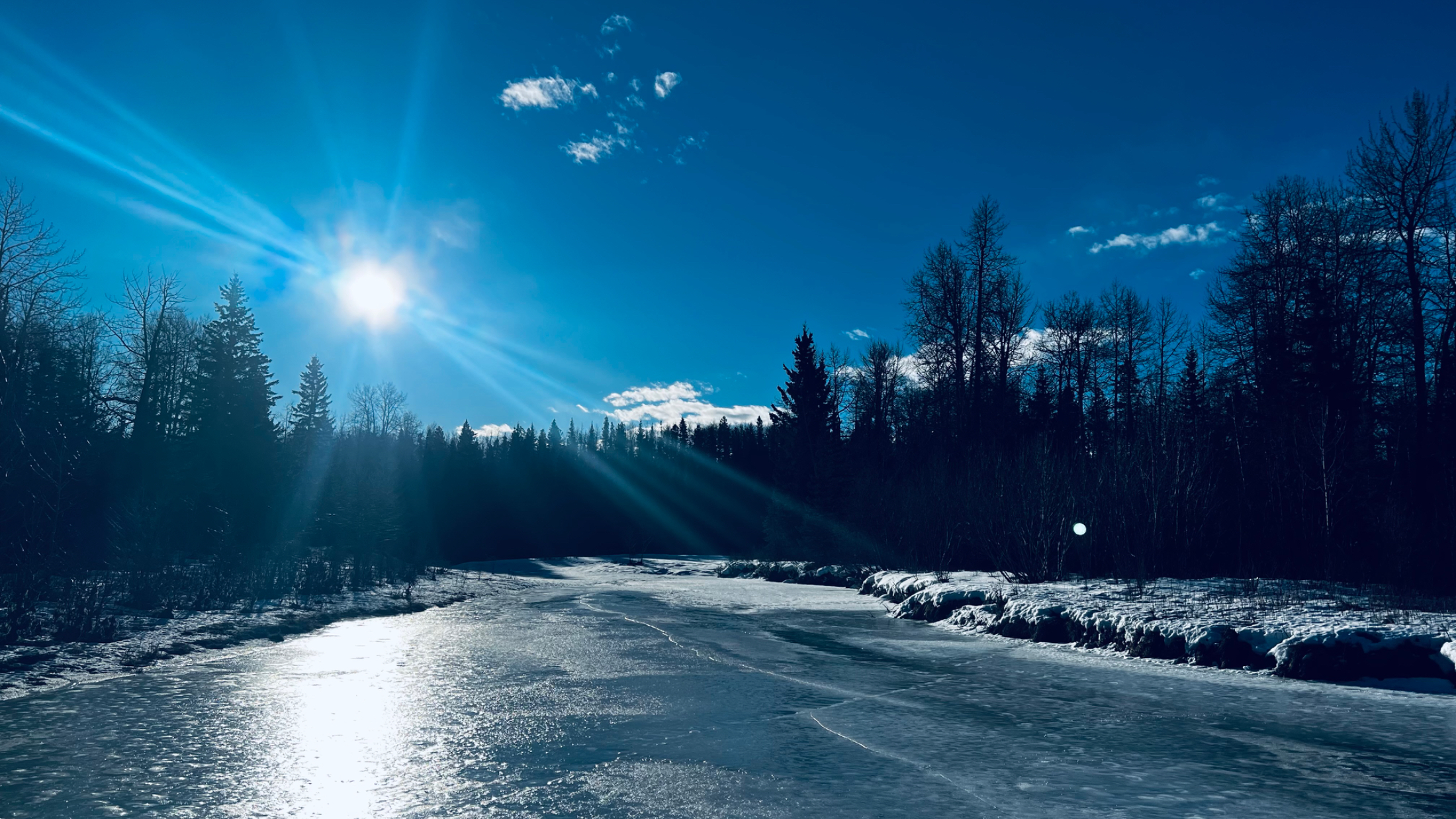
The privilege of living in the foothills Northwest of Calgary is never more apparent than during the transition between seasons. This winter, I have been fortunate enough to navigate the frozen reaches of Fallen Timber Creek via quad, venturing deep into the surrounding Crown land. However, with the recent Chinook winds pushing temperatures above +10°C, the ice is beginning to yield. As the weight of the quad becomes a liability on the thinning surface, I find myself transitioning from an explorer to a quiet observer of this remarkable waterway.
A Legacy of Water and Land
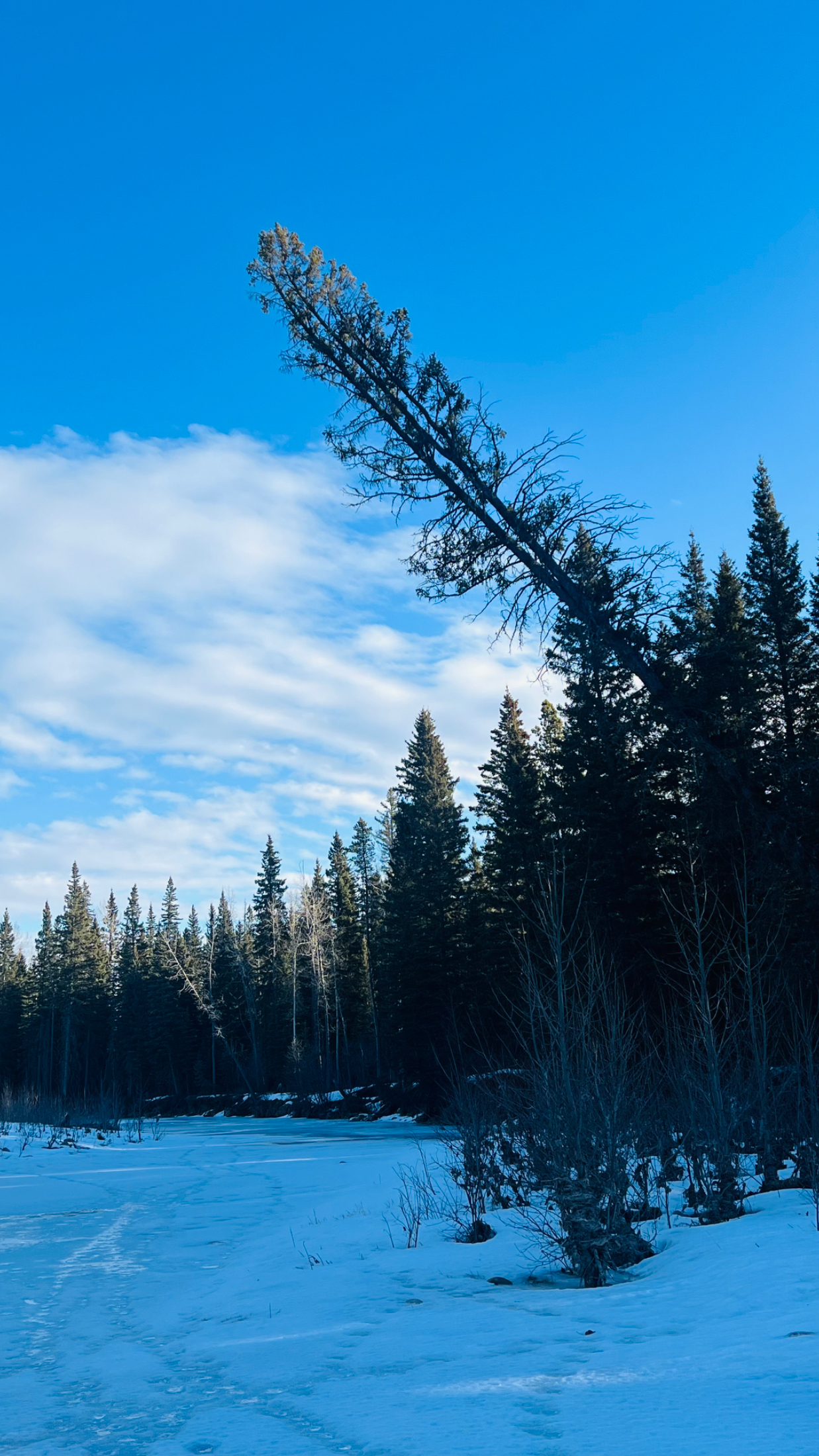
Fallen Timber Creek is far more than a scenic boundary; it is a vital tributary of the Red Deer River, carving its way through the Ghost River wilderness and the Bergen area.
Historically, this region was a cornerstone for early Alberta settlers and the logging industry. The creek earned its name from the massive tangles of timber—often the result of heavy winds or erosion—that once choked its banks, challenging the early explorers who navigated these foothills.
Today, the creek remains a lifeline for the ecosystem. Fed by a combination of high-altitude snowmelt and subterranean springs that filter water through the limestone and glacial till of the foothills, it provides a consistent source of clean, cold water.
This reliable flow is what allows local cattle to graze across quarters all summer without the need for supplemental watering, a significant asset for any rural property owner.
The Rhythm of the "False Spring"
Sitting by an open stretch of water where the ice has already retreated, I am reminded of a fundamental Alberta truth: we are currently in the midst of a "false spring." While the heart hopes for an early thaw to begin garden preparations and spring cleanups, the seasoned Albertan knows that winter rarely leaves without a final word.
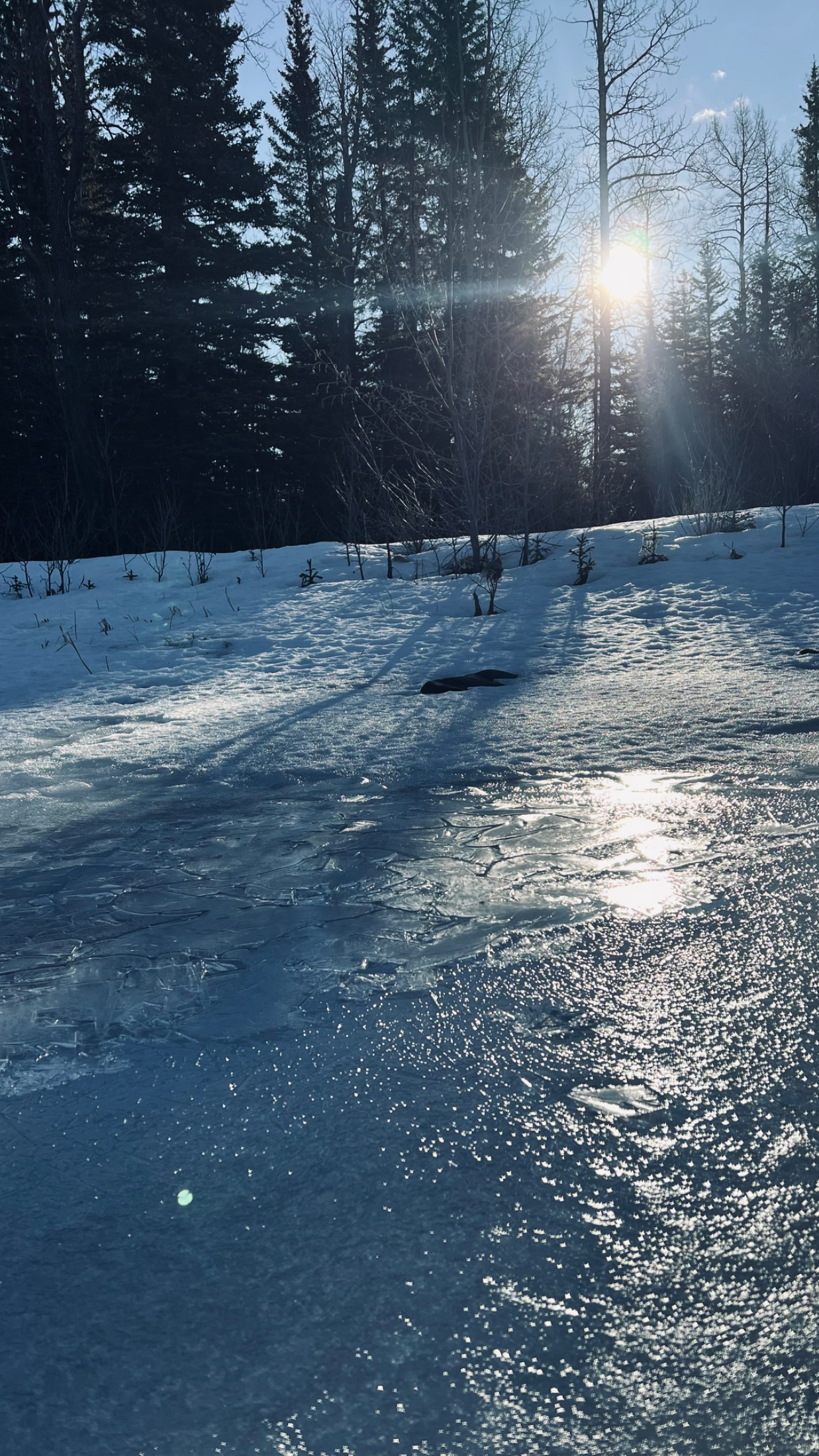
Despite the unpredictability, there is beauty in the cycle. This year, the early melt has revealed fascinating patterns in the ice—small "breathing holes" created by trapped air bubbles and thermal pockets. These are the first signs of the creek waking up.
• The Winter Retreat: In the autumn, the resident Brown Trout and Mountain Whitefish retreat to the deeper, oxygen-rich pools of the Red Deer River system to overwinter.
• The Spring Return: As the thaw progresses, we anticipate the return of the Brown Trout, alongside the arrival of Canada geese, mallards, and the prehistoric call of the Sandhill Cranes.
Life in the Foothills
Watching the sunset drop below the treeline at 5:30 PM, I’m struck by how the landscape complements itself. The fresh tracks of moose, deer, and elk etched into the riverside snow tell a story of a high-traffic corridor for wildlife. For a rural realtor, these are the "amenities" that matter most.
There is an inherent risk to living with water; the spring thaw can bring the threat of flooding, a natural challenge that requires respect and preparation.
Yet, in my experience, the trade-off is incomparable. The ability to cross-country ski or snowshoe across glistening ice in January, followed by the "natural air conditioning" of the creek on a +30°C July day, makes this one of the most desirable landscapes in the province.
Fallen Timber Creek is not just a body of water; it is a testament to the abundance of our province. Whether it is the constant babbling of the water on a summer night or the stark, silent beauty of the frozen banks, having a river in your life is a truly transformative experience.

